Monday, March 27, 2006

Journalizer


With the combined might of six Best Buy gift cards, I purchased my journal gizmo for the trip: a Palm Tungsten T|X. So far so good, for the two hours I've spent familiarizing myself with Garnet. Worth noting:
>>The 802.11b receiver interface is much snappier than the one in Windows CE. It finds networks faster than even my laptop does.
>>"HotSync" like it's 1996! Sheesh. Why not a file system explorer, so I can see how much space is left on the device? Or, say, so I can delete all the unwanted crap from my scant 128MB? Doc2Go is an especially terrible abortion of software.
>>VersaMail works seamlessly with gmail's POP3 interface. I can mail and journal away at the AYCE (hiker jargon for All-You-Can-Eat) restaurant using gmail and blogger's email-to-journal functionality. Provided there's a network around, of course.
>>The browser is extremely limited HTML only, but at 5.1 oz, I wasn't expecting too much browser.
>>Standard DC converter coupling? Not on our platform mister! This is such a common sin with manufacturers that it's hardly seen as sin anymore.
>>It seems to like my CSV databooks and my ALDHA PDFs, which is good. Saves me about five ounces of paper.
>>Bluetooth sucks insane amounts of power. Turned off.

Thursday, March 23, 2006

Misheard Lyrics Part I: Tori Amos

It's no secret that I work out much, much harder when I'm about to cry. So I listen to music that makes me feel sad. Then I shake like a crazy junkie which means it was a good workout.

Johnny Cash's rendition of NiN's Hurt, Big Country's Big Country, Dave Matthew's Crash, and, of course, most Tori Amos does the trick. The problem with Tori is that the sad songs I have in my head seldom match what is actually on the lyric sheet. If I knew the original lyrics I wouldn't find the songs nearly as compelling. Let's make up a little quiz to illustrate:

1) In the "Great Expectations" anthem "Siren", the lyric:
"Almost brave almost pregnant almost in love . . "
is followed by what?
a) "He ain't in love"
b) "Vanilla"
c) "Be naked, ah"
d) "Caramello"

2) What Star Trek character is referred to at least once in Tori Amos lyrics?
a) Kirk
b) Spock
c) Bones
d) Scotty
e) Sulu
f) KHAAAAAANN!

3) In Ms. Amos' collaboration with electronica artist Brian Transeau, "Blue Skies", the lyric:
"And I'm walking and crawling and"
is followed by what?
a) "So tired I'm insane"
b) "Steel belted, guaranteed"
c) "I tire of this tirade"
d) "Get off my lawn! Amscray!"

4) In "Talula", he's chasing what?
a) "Tomatoes"
b) "Placeboes"
c) "Galvados"
d) "Tornadoes"
e) "Chipotles"

5) In "Caught a Lite Sneeze", the lyric:
"Called my name but there's no way in"
is followed by what?
a) "Lucifer"
b) "Use that fame"
c) "Jumping Danes"
d) "Aslan's Mane"
e) "Easy lay"


ANSWERS
1)b;2)e;3)a;4)d;5)b

Monday, March 20, 2006

Ghawar Field

Sometime around five hundred million years ago, some trillions of tons of biota decided to die and be buried underneath the oceans of the world. Layers of rock built up around them, cooking the organic substances down to hydrocarbons. The vast majority of the liquids escaped and volatized. They did so because in those places the world cracked and changed, whether by glacier, volcano, meteorite- what have you. The places that have escaped change had trapped the most of this strange liquid hydrocarbon. Petroleum loves the dead places of the world.

The 21st century will revolve around the most dead geological formation in the human world: the Arabian plate. As petroleum is sucked out of the plate by machines and fed to our machines to move us humans from machine to machine (ostensibly to make money, which is mostly used to gather more machines), we have to wonder: what are our machines thinking?

They are thinking the same thing we were thinking when we cleared the first land to create the first farm. They want a place that looks like food. Our cars conspire: let us make this place of life into a dead place, like that desolation which feeds us.

When America looks like an asphalt version of the Ghawar field, then perhaps our machines will be happy, and let us rest.

Travis and the Women

John D. Macdonald is one of those writers whose prolificacy is underlined by an intimidating quality. No earth-shaking moral breakthroughs or historical impacts, mind you, he just effortlessly writes books that are really damn readable, which happens to be the hardest thing to do as a fiction writer. The serial character, Travis McGee, is put into a "noir" classification by sexless critics, a genre Travis jumps from whenever he gets a few paragraphs of monologue. He's a happy gumshoe- with demons, sure, and a bit cynical about the tackiness of Florida- but still a guy who loves the act of living, unlike the oversexed sadsacks that pass for noir these days. He's not naturally prone to violence, statutory rape, or any of the dark crimes that usually set apart noir protagonists. No, his integrity is what sets him apart from the "real" world. Travis would counter that it's the "real" world that's useless, with its unreal mortgages and its massive, mysterious salaries. Considering I'm about to disapper from the civilized world for six months, it's not too difficult to figure out who I sympathize with.

If there's one thing that Travis does noir it's his women. When our hero runs into that mysterious gender, they're what we would call "maidens". A pretty broad stroke I'll grant, considering he runs into some that double-cross him, but still maidens. As maidens, they have never brushed paths with home and hearth, or, if they have, their families were taken from them with such brutality that they revert to voiceless children. Travis is with them for a time and then they move on either as whore or as crone. The mother and her panacea for all violence is left behind, not really because Travis avoids mothers but because violence makes for a much more exciting story.

The great thing about Macdonald is that he knows it too. His character knows it, and as Travis grows older this void in his life gets too big to scab over. Life can very quickly get too exciting. Pushing forty, Travis eventually does find his issue, the consequences of a life spent avoiding mothers, and makes good with her. It's too bad he missed a tender period, but as he was stuck in a mystery serial it's not something you could reasonably expect him to go back and correct. You can almost see Travis smirking at both the noir and the "real" world. He's avoided both on a shortcut to what really matters.

Wednesday, March 15, 2006

Estimates

Estimated Date Town
3-May-06 Wesser, NC (The NOC)
15-May-06 Hot Springs, NC
21-May-06 Erwin, TN
6-Jun-06 Bastian, Va
15-Jun-06 Daleville, Va
24-Jun-06 Waynesboro, Va
5-Jul-06 Harpers Ferry VA
9-Jul-06 South Mountain, Pa
16-Jul-06 Pine Grove, Pa
19-Jul-06 Palmerton, Pa
24-Jul-06 Glenwood, NJ
2-Aug-06 Kent, Conn
7-Aug-06 Sheffield, Mass
23-Aug-06 Hanover, NH
26-Aug-06 Wentworth, NH
27-Aug-06 Glencliff, NH
29-Aug-06 North Woodstock, NH
19-Sep-06 Stratton, Maine
23-Sep-06 Caratunk, Maine
26-Sep-06 Monson, Maine
7-Oct-06 Baxter Peak (Katahdin), Maine

Tuesday, March 14, 2006

Appalachian Trail- the Video Game

I am a pretty amazing dork. By "dork", I mean that I still play pencil-and-paper Dungeons and Dragons at the age of 31. To be honest, the "dork" assessment needs review, as there are legions of older "dorks" on EverQuest, World of Warcraft, EVE Online, and, oh, see here . The difference between me and them is that they use software to help imagine that they are a Cajun Aquatic Elf, and I do not. In this sense, a "dork" is simply someone who finds it easier to suspend disbelief in the unreal world. On the savannah, such an ability would indeed prove fatal in short order. So I am a dork, but so were the first priests so many tens of thousands of years ago. Not such bad company, although it'd be nice if roleplayers built up an ideology more long-lasting than that of Gary Gygax, which seemed to revolve around polearms.

To be honest, the "roleplaying" part of gaming never appealed to me overmuch. I preferred the part where we reduce the world to a series of statistics. It's no accident that the first researchers of the personal computer were also Tolkein fetishists and, to a large extent, pencil and paper gamers. Information science is all about reducing the world to a series of numbers and simple themes. Gamers seek to reduce experience to a set of statistics and easily remembered themes. We reduced the world for our machines, and found that the machine's way of looking at the world was a lot more fun than ours. Now more than a million people around the world live through machines, run forests that exist only in the machines, hunt orcs in the machine, buy, sell, love, and die as people that exist only in the minds of our machines. Sometimes it's hard to tell if the world of online role-playing games is a sugary heaven or a sexy hell.

To keep in the spirit of this thing I propose an Appalachian Trail Role Playing Game. Character creation can use all six of the classic statistics- Strength, Dexterity, Constitution, Wisdom, Intelligence, and Charisma. Starting money could be a derived statistic of Intelligence and Charisma, representing the level of income you had when your fake person decided to quit his or her life to start the appalachian trail. Mileage per day (MPD) would be the most important derived statistic. Constitution would be a core determinant of MPD, but Wisdom represents the willpower to resist spending days in town motels. Roll a Will saving throw versus pizza! Oh, no, another day in town for you! A ratio of strength to pack weight (LOAD) would also go toward the MPD- and provide a use for higher income, as super high tech lighweight gear would cost a lot (even if you make it yourself, that still represents high INT, so to some extent the income statistic does not represent a cash salary but a level of resources). Complicate the MPD by throwing in a Chance of Injury Per Day (CIPD), which would be some factor based on MPD, Dexterity, and LOAD. Injury is bad, it would do point damage to Wisdom, as well as taking multiple zero days, and you have to check Wisdom every time you leave town, or face a particularly bad stretch of terrain and/or weather, or phone your girlfriend. Wisdom also allows you to spot objects, like the bear and her cubs in the middle of the trail fifty feet away. So losing wisdom can easily lead to losing more wisdom. Charisma is a grease statistic, increasing chances of hitches into town, reducing prices in town, and generally serving as a "luck" statistic, as well as contributing to your starting income. And . . . and . . intelligence . . you know what? This is ridiculous. Anyone looking for "AT: the MMORPG" can, well, go take a hike.

Wednesday, March 08, 2006

Grace

For a period after my motorcycle accident, I had seriously contemplated the priesthood. I was raised Roman Catholic, and after going through the standard period of rebellion, had come to some respect -even awe- at the Church's accomplishments in human history. The nostalgia I had felt at hearing the Nicene Creed again, dragged into church again with my useless left arm, was replaced by a mounting sense of the document's enormity. Every single sentence represented the end product of a separate centuries-long theological debate. Behind every word lay thousands dead, displaced, or otherwise silenced.

In studying the Church at college, I could safely separate myself from its majesty and power. Rational religion was supposedly buried by the Enlightenment, all true believers had supposedly gone into the grips of the charismatic churches. At Mass, I saw how wrong I was. This juggernaut of history lived on, and, furthermore, had the intellectual capacity to absorb everything learned from the Modern period. Ad majorem Dei gloriam. The sciences, literature, and the human mind are all part of the path to revelation of the Divine Mind. Like our Creator, we have universes within us.

Unfortunately for me (or, depending on your viewpoint, the Latin Church) I have no will to grace. Basically, I reject some key doctrines, like the Eternal Soul. Our brains are us, I'm afraid, which is a much less frightening notion than the various doctrines of the afterlife. Imagine: you die and are buried. Then, at some point in the future, you are restored to your flesh, somewhat confused, at which point you burst from the earth to terrify your descendents. Alternately, you die, then your soul- bodiless- is shifted into a state so close to the divine that it can have a conversation with it on a quiet day. This new soul has less to do with you than the e.coli living in your guts. In fact, since the perfect soul is in contact with the Divine, and we creatures of matter are an infinite distance from the Divine, our new souls would be about as different from us as something could be and still be something.

For similar reasons I reject the Resurrection, although it seems possible that Christ was an emanation of the Divine. One of the high points of humanity, you might say. This makes me a heretic of a very old order, in league with the writer of the Gospel of Thomas. For this, though, I can blame the Church. It is a central Catholic teaching that you- and I mean every one of you- can do what Christ did. We can, but we don't. We reject the Divine in us, and in each other, and we fall. There is no reason for it. We play with mortal toys, like clockwork men walking in addled circles, when we have worlds within us. When we reach inside of ourselves, inside of others, we touch the Eternal, as did Christ, or Buddha, or Shakespeare, or Einstein. In touching it, it touches us. There is no reason to return to flesh and be hoovered up by the sky. Our reaching for Truth- this is true Grace.

This is also heresy. Note I never went for the priesthood.

Tuesday, March 07, 2006

On Reactionaries

Intellectual history, at its core, measures the effect of thought on the larger affairs of humanity. It is a field in crisis. At best, the pursuit of ideological causes in history is seen as endearing. At worst the historicist outlook is portrayed as dangerously naïve, a debutante wandering about in a room full of materialist realities. Economics, demographics, geology, climatology: in functionalism they form the wave of the phenomenological world. The wave is widely regarded as the sole source of dynamism in human events. In this weltanschauung there is no action but reaction; there are no crises but circumstance. With this in mind, it is unsurprising that intellectual history has likewise declined in importance. The mind has been discarded in favor of the wave.

This assumes that our ability to comprehend the world around us has remained unchanged for fifty thousand years. This assumption is false. Humans do not interpret the environment objectively; they do so through a complex filter that defines as it records. If our surfer - our historical actor- judges his course by the shape of the wave, the shape of the wave is in turn described by the net experience of countless minds. This is why ideas are so important when gauging the rise and fall of complex societies. Intellectual history is the measure of this comprehensive power, the capability of ideas to shape the destinies of peoples and nations.

Myriad power groups in human history have consciously tried to seize this power so as to improve their lot. Controlling ideas is an extraordinarily efficient way to control resources, as the distribution cost of information is always lower than capital. For this reason it is also unpredictable, as anyone with a new information distribution technology can overthrow the existing order. Unsurprisingly, this leads to the pitting of one group of intelligentsia against the other. Visionaries on both sides fall to cynicism and violence with increasing frequency. Progressives become militant, and the authorities turn into reactionaries.

The Hobbesian establishment of a reactionary force signals the end of culture. True believers split away, the established struggle to maintain the status quo; the young polarize and begin arming themselves. Old friends turn on each other with an easy viciousness born from decades of association and unconscious rivalry. The lives of such men are often at the crux of history. The Kangxi in China, Tlaxcalan in Mexico, Cosimo II in Venice- each has tried to change his or her culture at the very pivot of history. Their counterparts- Confucian, Aztec, or Catholic- were no less impressive in their defense of tradition and what they saw as right. They maintained the old world in the face of the new, and tore their universes apart.

This must not happen here.

Friday, March 03, 2006

Darkness Remembered Brightly


One of the things most do not realize about the Third Reich is its unhinged flakiness. Leni Riefenstahl, and, by way of imitation, the entire motion picture industry, have successfully persuaded us of authoritarianism's elegance, rationality, and inevitable power. It's a pity, because the writings at the intellectual core of the Nazi regime are some of the most humorous in the historical record. People like Lanz von Liebenfels and his Electric Aryan Bugaloo from Aldebaran simply do not fit into our preconceived notion of "Nazi". We make ourselves feel better by ignoring him, and other key architects of the Nazi Völkisch, but it doesn't make authoritarianism pretty, rational, or elegant. Its intellectual basis was bankrupt; Mein Kampf steered more by self-pity than self-discipline. The trains didn't actually run on time, they just killed anyone who noticed that the trains were running late. They didn't play Wagner at Auschwitz. They played polka.

Something to remember in these troubled times, when authoritarianism is undergoing something of a revival.

Thursday, March 02, 2006

Shadowboxing

What in the world is the consumer price index based on? No one can truly say. 2005 annual increases are around ten percent for food, thirty percent for energy, and . . . the CPI at negative point eight of a percent? How is it possible? The quick answer is, it's not.

The CPI is calculated using some advanced economics, more than a bit of wishful thinking, and a dash of syncretic voodoo. One of the fantastic ways they can keep CPI low (if they want) is by separating products into feature sets. For example, let's say last year's DVD player cost a hundred bucks. This year's DVD player costs one hundred fifty. Holy God, you might say, that's an increase of fifty percent! In saying so, you reveal your lack of economic sophistication (as well as your lack of friends in the Bureau of Labor Statistics). In reality, this year's DVD player can answer emails, play video games, and record television programs. The BLS essentially separates one product into three (or more). To get last year's "price" for your "DVD player" it sums up last year's costs for a computer, a game console, a VHS tape recorder, and a DVD player. It's remarkable that the figures aren't even more ridiculous, but we can take it as a given that the BLS is only performing this snake dance for a select few generous lobbyists.

They might think they're quite clever at first: all the technologies are pretty close to free, and they can keep milking the DVD franchise. Then something happens like HD-DVD (or Blu-Ray, depending on where your loyalties lie). All the staff moved from the DVD department is busy chunking out another piece of email bloatware, or working on some useless game, or downloading midget porn, while the competition comes out with a media that not only plays movies but allows the audience to sniff the actress' panties.

What happens then is you are sunk. By adding false value to your stagnant products you have basically boxed your resources into the corner, and are a sitting duck for the oncoming technology that has a grip on what the market wants. Lessons? The consumer, not the CPI, is what determines value.

The Void

Thursday Afternoon Dao

Thirty spokes will converge
In the hub of a wheel;
But the use of the cart
Will depend on the part
Of the hub that is void.

With a wall all around A clay bowl is molded;
But the use of the bowl
Will depend on the part
Of the bowl that is void.

Cut out windows and doors
In the house as you build;
But the use of the house
Will depend on the space
In the walls that is void.

So advantage is had
From whatever is there;
But usefulness rises
From whatever is not.

Wednesday, March 01, 2006

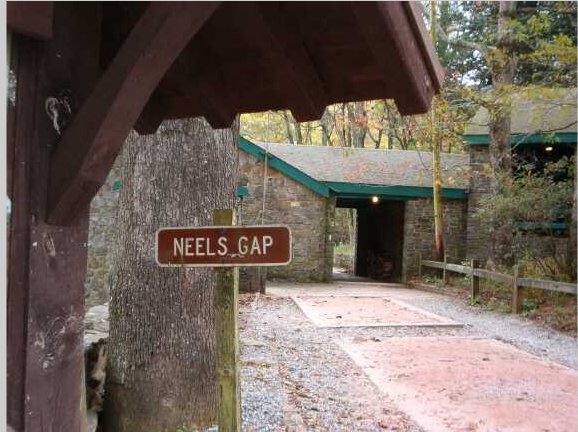
Neel's Gap


Given the late date of my 2006 departure, I decided to bite the bullet and start where I left off in 2003: the Walasi-yi center at Neel's Gap. It'll trim the first four or five days from my AT attempt. I'll need every day I can get to make Katahdin by October 15, when Baxter State Park closes for the winter. Technically speaking, this makes my through-hike just a really long section hike, but you know what? Who cares. As long as I am standing on that big rock come October.

If things go really slowly on the way to Maine, I suppose flip-flopping is always an option, as well.

Gear List

Here it is, the standard gear list posted by all AT hopefuls. Hopefully it will help others looking for only moderately overpriced backpacking equipment.

Keep in mind I went extra cheap on the real cold weather gear, since I am looking at a late April departure.

Wght(oz)    Item
21    Tent-Dancing Light Gear Ultralight Brawny 9ft
11    Insulated Jacket-USAARM M-65 Jacket Liner
10    Insulated Pants-USAARM M-65 Pants liners
36    Sleeping bag-Campmor Campor-20
12    Rain Jacket-Marmot Precip Jacket
6    Rain Pants-Marmot Precip Pants
7    Thermals-Bodysensor Bodysensor long tee
7    Thermals-Bodysensor Bodysensor tights
56    Pack-Granite Gear Nimbus Ozone
1    shorts-asics shorts
1    bike shorts-generic underarmor
1    Hat-generic hat
13    Thermarest-thermarest sleeping pad
2    Tent pegs-Vargo Titanium Tent Stakes (6-pack)
2    Insect spritz-generic deet
4    Water treatment-aquamira water treatment
1    Pepsi can stove-me stove
6    Fuel-alcohol alcohol
1    Food bag, line-gorilla 80lb test braided monofilament
1    Kettle-MSR kettle
1    Headlamp-generic Red LED
1    Camp shoes-me slippers
4    Water bottle-camelbak hydration pack
2    Bear spray-generic capaiscin
1    Spray holster-me holster
6    Book-whatever whatever
9    Camera-sony cybershot
8    Notepad-generic sketch pad
3    Toilet-generic unmentionables
234    TOTAL DRY PACK WEIGHT(OZ)
14.625    TOTAL DRY PACK WEIGHT(LB)

Thursday, February 23, 2006

Dead Man Walking

It's a matter of months now, soon weeks. I will walk more than two thousand miles to Maine, funds and health permitting. It has all the pleasant aspects of being under a death sentence. Every experience, every sensory object in this life is suddenly a feast of self-examination. The way that I interact with the world is about to come to an end, and what are we, really, other than interactions, information filters, condensates of a computative quantum ether? The people in my life, work, my strange relationship with a dysfunctional Company . . . I am looking at them from a new perspective, realizing that everything is about to pass far from me, into rock, shadow, and fog.

So I soon shall end. Something else will proceed, as the zebra carcass goes about its business in the body of the lion, or, for those of a spiritual bent, as the soul goes about its business in the Wherever. What will the trail shit me out as? Am I nutrient, virus, or angel? I have absolutely no idea.

Wednesday, December 28, 2005

Wildebeest

As mentioned in a previous post, Carbon, I believe it is self-evident that superior systems emerge from lower-level systems. I believe this makes things better, in a general sort of way, by binding entropy in complexity and in systems. Call me an optimist. Parasitic or predatory systems (forgive me for being unable to differentiate the two) do manage to bosh the process occasionally with oversuccess.

The optimal predator/parasite's energy needs are equivalent to the prey system's energy loss due to entropy. A large system, say, a thousand wildebeest, manage to lose track of five calves in a month, due to loss of information among the system's members. Well evolved lions adjust their behavior and population so that they eat five calves a month. Any less and they starve, any more and the energy gained in extra wildebeest is made up for in angry wildebeest. Predators do not want an epic stuggle, and they don't particularly want angry prey. We enjoy watching Epic Struggles not because we admire the drama, but because it means someone else is doing the struggling. Oh, my king and my hero! Lead me to battle, and stay well ahead of me!

Back to our wildebeest and our hungry lions. Imagine now that the lions are symbiote with a neural parasite that makes wildebeest deaf, but not lions, and that it is waterborne, passing easily between lions and wildebeest. The parasite increases entropy in the wildebeest herd by limiting information transfer between members, and the lions get fatter without being kicked or gored.

This would be incredibly nifty for the lions, but it would rarely happen in the natural world. It takes a lot of time and a lot of randomness, factors that favor the prey animal. With more wildebeest than lions, it is more likely that the wildebeest have evolved something that promotes feline tooth decay or something along those lines, like feline leukemia virus (FeLV). But let us assume that the lions have somehow gotten the upper hand in the epidemiological war. The relationship is seriously busted now, as the prey system grows smaller, its ability to evolve resistance to sickness weakens, their health slumps, entropy increases, lions get fatter (and there's probably a lot more of them). Sudden crisis for prey, not-too-distant crisis for predator.

What happens if one lion population hosts the deaf wildebeest virus and another does not? It raises interesting questions. I leave it to the reader to find analogies in the business world.

Tuesday, December 27, 2005

Carbon

All good systems seek to maintain themselves. If they do not, they cease to be systems, so any behavior that it not self-maintaining is, by definition, bad. At the same time, the system maintenance must be able to change quickly enough so that the environment does not destroy it. An atom is a system, and a darned good one, as it has generally worked quite well for many billions of years, depending on how you tell time in Riemannian space. It fails in places like singularities, but as Reason itself breaks down around singularities, that's really not much of a failing. The reason for the success of the atom is that it is tightly bound to the environment. Its appendages into the environment, electrons, are small enough that they can hear raised voices from the Planck distance, the most basic unit in the reality grid. In other words, if change is occurring, it's hard to make a change so small that an atom can't hear it. Furthermore, being so small itself, the atom does not neet Project Managers to communicate the change to all its parts, although occasionally there are spin-offs and mergers.

The electrons themselves are sensitive to probability. If the fourth dimension is time, and probability is a sort of ill-defined fifth dimension, then things like electrons and gravitons are the movers and shakers in this odd sphere. Mass is concentrated probability, and it slowly gathers things to it, forming suns and planets. Chemicals bind the escaping energy of the cosmos into stuctures that hold that energy in a pattern, gathering more probability as the universe wonders exactly how that energy is going to get out, like an audience at a Jenga game. The structures grow into systems, and eventually systems like you and me can begin wondering about how these structures came to be in the first place. We do this because we can see the "might-have-beens", the crucial fifth dimension that allows us to navigate around things like trying to commute past high schools with nothing but a two lane access road.

So our system, life, has seen itself in the mirror. Congratulations. Science can now continue, but life's next step is a bit more difficult, as it involves organizing systems into the extremely contentious supersystem we call "society", or "culture", or whatever it is they are calling it in this year's intro to anthro textbooks. We need to think about this because, as anyone who witnessed the twentieth century can tell you, the work done in this area has been lacking in rigor.

Living systems are the best analogy we have for society's integration of complex systems (humans). We can start with the rise of genetic material from mobs of mere molecules 3,800 million years ago. It is important to realize that there were an Enron-sized pile of fuck-ups even at this early date. Even after a life system was established, wild imbalances in the system resulted in environmental destruction unmatched even today (see "Oxygen Catastrophe"). Unlike carbon atoms, however, we supposedly have an information exchange between human beings that is capable of correct the larger supersystem and the behavior of the subsystems, i.e., you and me. Also unlike carbon atoms, we have ideology, religion, and the Heritage Foundation. Humans win by default, as we have not yet destroyed all life with poisonous gas. Nuclear weapons are far prettier, in any case, and the only art carbon atoms are interested in is jewelry.

Since we've established that human beings have at least the capacity to be smarter than carbon atoms, let's move up a level, to another established system. The human brain is, arguably, a self-correcting system (most of the time) that can get most of its ducks in a row when the environment changes - without destroying its internal structure (almost more than half the time). It does this via a host of control mechanisms, most of which are located, stupidly enough, in the same office block as those housing our Mortal Sins. When your hypothalamus is trying to route hemispheres occupied with the Ontological Argument for the Existence of God, it is going through that one time in fifth grade that Lesia let you put your hand up her skirt. The reason for this is that your brain's first priority is your system first, and your supersystem second (although current research indicates that some folks are preselected for sacrifice in a human population, it is not the norm).

Being a free carbon atom is nice and all, but the supply of information reaching you is negligible in comparison to the information flow your friends are getting on the quantum highway inside their huge RNA molecule. It doesn't make sense to be a carbon atom. You abandon being an atom because you see much bigger things in your future (literally) as part of a system. The body did the same thing with its neurons, via cell specialization, the hypothalamus and assorted control mechanisms. Human society has done it with a successive grouping of social constructs so myriad that I am not going to google them all. It doesn't even matter what they are all called. What does matter is that the supersystem must be able to navigate five-dimensional space in a symbolic fashion, and dodge the symbolic semi running a red light.

So human society needs better information exchange and a new hypothalamus or organizing structure, but that means saying things about religion and ideology that I really don't want to get into here. We're already well down the road on the information exchange part, but a rigid control will make a rigid supersystem, unable to make timely changes. We traditionally haven't had to worry about information and reactionaries in the same space, but suffice to say we've seen a new sort of religious fundamentalism, one that isn't afraid of the internet, electronic survellance and ID tags. I don't want Dr. James Dobson to write the hypothalamus of 21st century humanity, because 1) I think it would be a suffocating world, and 2) I don't think his ilk have the vision of a carbon atom, much less that of blue-green algae.

Exile

I am a first generation American on my father's side, a second generation on my mother's. My family did not go "over there", to come back to peacetime. They came from there, Europe of the twentieth century, Rwanda with panzer armies and no jungle. My mother's family was confused and scandalized by actions of family against family, of men fleeing women, never to return. My father's family was confused by actions of self against self, but with these various near-psychotic characters somehow staying together. As the only enemy I have ever acknowledged is myself, I naturally have come to sympathize with my father's family more. Psychosis and Russianness are like ice cream and apple pie.

Natural sympathy, of course, is no substitute for a good story, and my father's family has plenty of that. They were Cossacks, hardly domesticated, at least to hear grandmother talk of them: marrying their stepdaughters, poisoning their wives (when they complained), initiating pograms and writing damned good poetry about all of it. Even the pograms had nursery rhymes written about them:

The Chechen sits in the dark by the lake
He is sharpening his knife
The rest of the village is drinking and dancing (they have lots!)
But the Chechen still sharpens his knife

Then communism happened, or rather, as P. J. O'Rourke memorably clarified, "communism with Russians in it". My family fled. Starting out as groups of constitutional monarchists (Kadets), they settled in Yugoslavia. They established a sort of miniature Kiev, complete with their own miniature Russian Orthodox Church (now known as ROCA, or ROCOR, as opposed to the Russian Orthodox Church, which was re-started after the fall of communism), waiting for the day Lenin and his dastardly Jewish cohorts might be brought low. High hopes were had for a Hitler-Kadet restoration of Imperial Russia, but Hitler's penchant for enslaving and/or killing anyone east of the Dnieper put a clamp on that idea. Hitler came into Yugoslavia and killed some people, then the Americans came and killed absolutely everyone. The United States military doctrine about entering towns was pretty simple back then: if there is even an appearance of resistance, bomb the living shit out of it.

My great-grandfather was shot by partisans sometime in this period, something that always made me wonder. Why would they shoot kadets who were on their side (as grandmother has said out family was)? Was great-grandfather collaborating with the Nazis? I have read in books that the Kadets were generally inclined to hug Nazis, in a large-scale history book kind of way, but it is a hard thing to know about your great-grandfather. It would not be a moral failing if he was. Morality in general was having a hard time on the Eastern front. The partisans come in and shoot anyone who doesn't cooperate. Then the Nazis come in and shoot anyone for cooperating with the Partisans. Roving Albanian gangs come in and shoot everyone that hasn't been blown to bits by B-17s. At least the Nazis had snappy uniforms, and that's something I can see an old Tsarist appreciating. So many possibilities. More likely than any of them is simple larceny. He was well-off, and known to be well off (virtue of the snappy uniforms) and the partisans, like all young men with guns, relieved him of his well-offedness without a whole lot of political thought.

My grandmother tunnelled from the rubble of stone and corpses that was Belgrade and went to find a displaced persons camp. Somewhere in this period my father was born. She probably wasn't actually looking for a camp or much of anything at this point, but wandering and trying to survive. It is shameful that there is still a quarter of the world's population living like this. It sounds easy to accept when it is your family, but not easy when you are there, I imagine, probably impossible for many in that poor old continent. My grandmother's childhood friend hung herself before they could reach anything like sanctuary, somewhere on the road from Belgrade. It was not a terribly uncommon way for young women to pass to rest: willowy bodies rotting, strung in the cherry trees, like toys or kites abandoned in childhood. Too heavy to live, too light to fall.

My grandfather had a somewhat less grim time of it, although perhaps this is simply my impression, as my grandfather died before I grew interested in such things as history or the Reichswehr. An engineer, he was conscripted to shoot at Germans, but proved to be sincerely terrible at it. The Germans took him to a POW camp briefly before it was blown to bits by B-17s, and he made his escape on top of a Panzer. He wandered Europe's ruin as well and decided to up and head for America. Whether or not grandma and grandpa had some sort of scheduled rendevous I do not know, but I do know they found each other in the processing stations at Ellis Island, sometime in 1947. Planned or not, that must have been something to see. I hope everyone's life has a moment or five like that.

The one good thing about my life is that I have had moments that I think were like that. I always let them go, like a kid with toy balloons. This is partially because I enjoy hurting myself but also because I do not want to squander my chances of having another, and another, and another. Those moments are the reason for life, and getting to them is the act of living. I have internalized the exile. As the exile wishes to return, I wish for nothing but yearning. I want nothing more than to want. And so I will walk.

Separated

Sometimes separation is unbearable. Not the violence of the moment of separation, or the obscurity or distance that we sometimes mistake for separation. It is the object's awareness of another, and the other's awareness of it, without rendevous or hope of meeting, that is separation. Earth and Luna dance about each other, tidally locked, separated. We watch the lovelorn orbit a beloved, yearning, as Kim Stanley Robinson so aptly put it, "for orbital decay", the moment of impact and ecstasy. In the vacuum of modern life orbits never decay, and we fly through lives unimpacted, unscarred, and alone.

I have many scars. The tracks of sharp instruments are everywhere, some wielded by another in anger, more wielded by myself upon myself. Lines where the teeth of a bear entered into me. Doctor's cuts over my lower back. The long wide scar underneath my left arm, where that limb was torn from my body. The arm is again part of me but will never be as it was. I have been separated.

My bedsheets stink of fearful dreams, disfigurement, and madness. Six thousand newtons on my twenty-third birthday, I fly from the saddle at one hundred and fifteen feet per second, forearm the first to make contact with five tons of concrete. Angular momentum twists my body around; the humerus rotates in the shoulder joint until it comes out. It keeps rotating, pulling the flesh from its moorings, like a drumstick being pulled from a turkey. No pain, not yet, but in dreams the pain is always there, the swinging useless meat is filled with it. I often dream of old love before the dream-arm is torn from me. I see the face, feel sweetness, a hot fire, wholeness, then impact, and the agony of something taken away forever. I can see me coming apart from me. It is no dream.

So I avoid mirrors. I avoid them for the same reason I can not watch the end of Cinema Paradiso, or enjoy romance, or read Inferno without bursting into tears. The flesh, the love, the divine: all of these things are separated from the self by a barrier. We build the first barriers between our selves and the outside. Barriers outside of the self are the key to language and intelligent existence. They are necessary. Some barriers are unneeded, and their erection causes pain, as they separate things that should be inseparable. My barrier is between myself and myself. I can see it in my reflection. It has been put there by enormous energies, and it will take an enormous energy to remove. I will do this.

I am leaving early next year to walk two thousand miles up the Eastern seaboard of the United States. I am enough of a backpacker to know that no great understanding comes of this. There is too much pain, eating, sleeping to be done for serious cogitation. But it can shrink these terrible spaces. I will draw closer to the world and to my own poor body, the separation drawing down to a tiny distance. And then we shall dance, like the Earth and the Moon, separated.

O Earth

Those of us gifted with a self-destructive pathology are often obsessed with the image of rebirth. The attraction to it is not in renewal, of course, but in the havoc that must precede it, a havoc to which we are inexorably drawn. We sink our claws into ourselves and pull off our skins, looking for the perfect stranger hiding in our guts. The stranger is never there. He has already been warped by the pain you have brought to him, and he huddles, as twisted and evil as you were when you started, in the life you yourself have broken. He cries and begins scratching, and soon it happens again. The stranger grows into your hateful self, over and over, flaying its crusted hide until it chokes on scar tissue and you are dead. That is your "rebirth". Rebirth is a scam and it's run by Hope.

Backpacking is the perfect activity for such as us. At first I had bought into the rebirth gimmick and thought that was what was happening to me in the woods. I know now it is much simpler. The venom reserved for myself flows instead into the great hill that rears above my head. I dig my talons into the hill and pull, drawing myself forward, each step a little universe of pain and glory. While I pull at the mud, the stranger inside me cries and I see, clearly for the first time, that it is a child, a perfect tiny child. It says thank you, o earth, for bearing this thing that would hurt and flense me. Thank you for your beauty and endurance. Thank you, thank you.

Regarding Journals

Syncretism is in my nature. It is my great blessing and my curse. It allows me to learn new concepts quickly. It also makes any error in my understanding disturbingly persistent. Take, for example, the relationship between King John and the Albigensian Crusade. King John fought a losing land battle at a proximate time to the eradication of the Cathari. As both the King and the Cathari lost, I had assumed an alliance between them, and have even argued in favor of it. No such relationship existed. I formed similar misplaced opinions about the relationship between the Paduan reformers and the firebrand Italian Protestants. I had assumed that their similar radicalism was a direct offshoot of both being spurned at Trent, when in reality people like Martyr Vermigli and Ochino would never have rejoined the Rome of their time. They would have gone to the extremists regardless. What looks like conspiracy is more often coincidence. There is never a big picture, and if there is, the actors of history never glimpse it from where they stand. Such was the death of my belief in ideology as an historical force.

Often, in defiance of my gifts, I plunge into byzantine levels of detail, an act that is at once painful and educational. From the detailed process I sometimes gather a syncretic understanding, more often I do not. My thesis is an example of where I did not. No matter how much detail one gathers, it does not prove intent. The theological reformers of Padua had no longstanding plan to join with the rueful wiliness of the Church in England. Gathering a detailed process of how airline trips are made does not give one an understanding of why they happen, or of how a travel agency reserves seats on an airplane. These processes just happen, and can only be truly understood by joining with them.

So this journal is not centered on detail. It is a syncretist account, the form of my mind after being subjected to the details of the trail. Some things may stand out enough to be assimilated into a journal entry. Most will not. This is not a crisis, as everything there is to say about rain, cold, hostels, mud, hotels, food, snoring, and the countless other physical trail experiences has already been said, and probably better, by more concise journal keepers than myself. This journal is an account of my mind, and not my body.